From Raw Polymer to Micron Precision: How The Filament Factory Extrusion Process Works
Ever wonder exactly how a handful of raw plastic pellets transforms into a continuous, high-performance strand of 3D printing filament? In the industrial manufacturing sector, consistency is everything. A variation of just a few microns in your filament’s diameter can mean the difference between a flawless print and a catastrophic, clogged-nozzle machine stoppage.
At The Filament Factory, we have engineered a world-class, multi-stage extrusion line designed to eliminate variables. We don’t just melt plastic; we use advanced thermodynamics and real-time digital monitoring to produce perfectly uniform consumables.
Here is a look behind the scenes at exactly how our proprietary extrusion system transforms raw materials into premium filament.
Phase 1: The Raw Polymer Dehumidification
Many industrial polymers, such as PETG, Nylon, and even PLA, are highly hygroscopic. This means they actively absorb moisture directly from the South African atmosphere. If you extrude damp raw material, the trapped water flashes into steam inside the nozzle, creating microscopic bubbles that ruin the tensile strength and clarity of the filament. In some materials this water will permanently damage the molecular structure of the polymer, dropping the melt viscosity and fundamentally changing the product.
Before entering our machinery, all raw resin pellets undergo a strict 4-to-6-hour drying cycle in our industrial desiccant dehumidifying dryers. We pull the moisture content down to less than 0.02% before production even begins.
Phase 2: The Melt and Homogenization Zone
Once dried, the resin enters the extruder hopper. Here, advanced gravimetric feeders mix the base polymer with precise percentages of premium colour masterbatches or pigments.
The mixture drops into the barrel, where a high-torque, precision-machined extraction screw drives the material forward through several independent heating zones.
As the screw rotates, it subjects the polymer to intense thermal heat and high mechanical shear stress. This compression forces the plastic to melt uniformly, breaking down any crystalline structures and creating a completely smooth, air-bubble-free molten mass.
Phase 3: The Gear Pump and Die Head Stabilization
Even minor pressure spikes inside the extruder barrel can cause the volume of plastic exiting the machine to pulse. To achieve absolute dimensional stability, we route our molten plastic through a high-precision volumetric melt pump (gear pump).
[ Barrel Pressure Fluctuations ] ➔ [ Precision Gear Pump ] ➔ [ Perfectly Steady Volumetric Flow ]
The gear pump acts as an unyielding gatekeeper, regulating pressure down to a fraction of a bar. It pushes the molten polymer through our custom-bored extrusion die head at a completely steady, continuous rate. The plastic emerges from the die as a thick, hot, malleable strand.
Phase 4: Precision Quenching and the Calibration Pull
As the hot strand leaves the die, it immediately enters a multi-stage, temperature-controlled water quenching bath.
- Warm Water Zone: The strand hits warm water first to safely bring the core temperature down past its glass transition point without shocking the material.
- Cool Water Zone: It then transitions into cold water to lock in its final, perfectly circular shape.
Throughout this process, automated dual-axis tractor belt pullers maintain precise tension on the line. By meticulously balancing the speed of the puller against the output of the gear pump, we stretch and calibrate the strand down to its exact target diameter
Phase 5: Dual-Axis Laser Gauging and Spooling
Before the filament wraps onto its final spool, it passes through our most critical quality control mechanism: a live high-frequency dual-axis laser micrometre.
This sensor measures the diameter and ovality of the filament thousands of times per second along both the X and Y axes.
- The Tolerance Standard: If the line deviates by more than ± 0.03, the system alerts our operators, and the sub-standard section is automatically flagged and rejected.
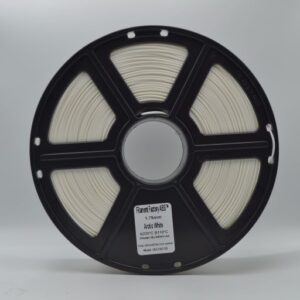
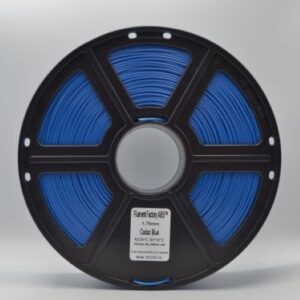
Only filament that passes this rigorous, real-time data audit moves to our automated precision tension tension-spooling systems, where it is cleanly wound to prevent tangles, vacuum-sealed with fresh desiccant, and packaged for delivery.
The Result: Industrial Predictability
By managing every parameter of the extrusion ecosystem with strict engineering discipline, The Filament Factory guarantees a product that performs identically from the first meter to the last. When you load a spool of our filament into your machine, you aren’t just printing with plastic—you are printing with highly engineered, micron-accurate peace of mind.
Experience the difference that precision extrusion makes. Upgrade your manufacturing supply chain with South Africa’s premier local filament producers. View our complete polymer range and technical datasheets online at www.filamentfactory.co.za or contact our sales team to arrange a bulk factory-direct supply agreement.